
The unsolicited advice, the condescending tone, the ignored or overlooked expertise, based on… well, pick one. Ignorance. Arrogance. Stupidity. Excess confidence. Self-entitlement. The patriarchy. If this magazine has sought to achieve one thing (several, really), it’s that women have every bit as much intellect, business acumen, knowledge, and inalienable right to challenge all of the proxies that have gone before them. And some men don’t like that.
Certain men are now feeling so downtrodden at the thought of women doing – and doing well – what they considered was ‘their job’, challenging their power and status, contradicting their word, that they feel like an endangered species. It’s the same across many aspects of culture, whether gender, race, sexual orientation or nationality, so when women outperform them, they start whining. Something about ‘woke’ or ‘positive discrimination’. Naturally, Dynamic is not interested in this status quo.
The cultural roots of the word gained widespread attention after author Rebecca Solnit published her 2008 essay “Men Explain Things to Me,” even though she did not use the actual word ‘mansplaining’ in the text.
In broader terms, while Solnit originally meant to describe a gender-based power dynamic, the term is more often used today to refer to any overconfident or patronising explanation given to someone, regardless of gender.
In 2014, Solnit told the Guardian in an interview about how she felt being the creator of the word ‘mansplaining’, “A really smart young woman changed my mind about it. I used to be ambivalent, worrying primarily about typecasting men with the term. (I have spent most of my life tiptoeing around the delicate sensibilities of men, though of course the book ‘Men Explain Things to Me’ is what happens when I set that exhausting, doomed project aside.) Then in March a PhD candidate said to me, ‘No, you need to look at how much we needed this word, how this word let us describe an experience every woman has, but we didn’t have language for.’
“And that’s something I’m really interested in: naming experience and how what has no name cannot be acknowledged or shared. Words are power. So if this word allowed us to talk about something that goes on all the time, then I’m really glad it exists and slightly amazed that not only have I contributed about a million published words to the conversation but maybe, indirectly, one new word.”
“Do men still explain things to you?”
“Do they ever! Social media are to mansplainers what dogs are to fleas, and it has brought them out in droves. But more than anything since I wrote ‘Men Explain Things to Me’, the public conversation offers up a dramatic uptick in guys mansplaining feminism and women’s experiences. Worse, they’re just denying that we even need feminism.
“If there were awards to be handed out, I’d offer one to the man who told a woman friend that – one, women actually like catcalls from, two, a man who’s only spent time in men’s locker rooms. So according to him, we like street harassment, because we’re just crazy that way. How do we know? Just ask an expert. Obviously one who is not a lady.”
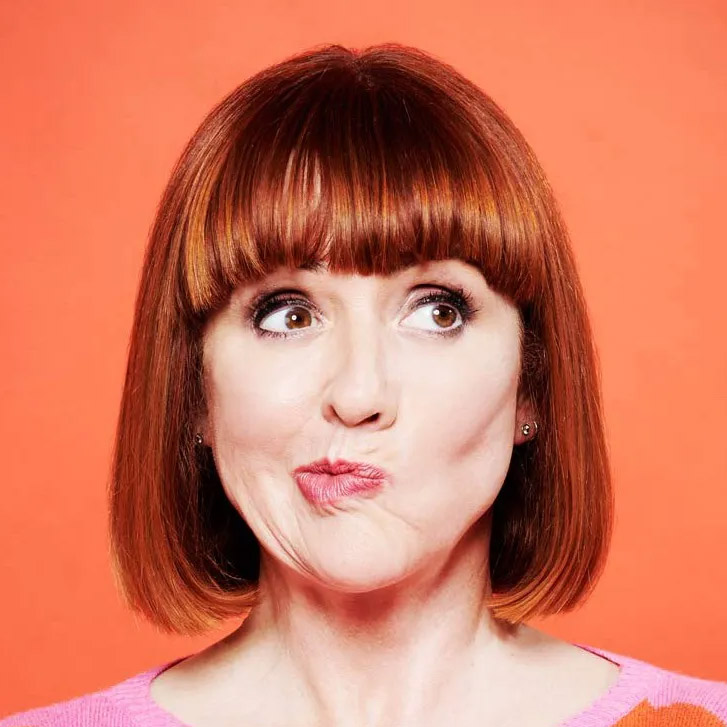
Back in the UK, and more recently, one of the most frequent recipients of mansplaining is comedian, writer and TV producer, Cally Beaton. She spent 25 years in boardrooms and in TV production before leaving to tread the boards. Her expertise is exemplary and wide-ranging. Until she meets a non-expert, it would seem, one of whom was more than happy to say how her time and experience have been wrong.
Beaton is also mansplaining’s main protagonist and, over the past couple of years or more, has taken to posting short videos on social media, describing how she has been on the receiving end of persistent mansplaining either during, before or after her stand-up shows.
Actually, for ‘describing’, it’s more ‘brutal takedown’. If you can tear yourself away from this august magazine, head to TikTok and YouTube and type ‘Cally Beaton mansplaining’. There are myriad examples of her exasperation, brilliantly told, usually while taking her dog ‘Jeff’ for a walk.
As Newsweek reported in May 2024, “Cally Beaton explained in a video that she was due to speak at an event earlier this month when she noticed that her name card wrongly listed her as Carry. She asked for it to be corrected, but instead of changing it, the man she spoke to insisted that Carry was correct, despite her protestations that she wasn’t.
“It was extremely frustrating for Beaton, who lives in London. She told Newsweek that it’s all too common for people to “doubt a woman’s credibility.” She feels that this wouldn’t have happened if she were male, but because she’s a woman, the man chose to mansplain her own name. Since she shared the “ultimate mansplain” experience on TikTok, the clip has been viewed over 425,200 times (now 493,000) and gained more than 54,900 likes (now 63,000) in just days.
Beaton, a comedian and podcaster, said: “I’m a very experienced speaker, and I feel that a woman probably would not have said that to me. She’d have tried to help. Also, if I were a male speaker, I don’t think that guy would have said, “No, that’s not your name.”
It wasn’t the only time she had been mansplained over her name. She was in a ‘well-known coffee chain, noted for its green and white logo’, when the barista (alright, bloke behind the counter) pointed out that she was spelling her name wrong. “Cally is spelt ‘C-A-L-I’” he unwisely decided to mansplain to her. Your forehead hurts after a while with all the facepalming.
As a result of the first video being posted, Beaton was inundated with examples from TikTok viewers describing their experiences of being mansplained. “What an embarrassment of riches,” she commented in a follow-up post. One thing specifically asked for was what was the best response to this ignorance; what is the thing she’d wished she’d said at the time when thinking about it later?. Her favourite at the time was, “Please don’t confuse your Google search with my PhD.”
In another post, she references a conversation about a book by Caroline Criado Perez called ‘Invisible Women’, which a clueless male in the meeting she was part of kept talking over her. Or at least, the male was trying to reference it; Beaton was helping him with what he was on about, and he wouldn’t listen.
Soon after these first videos, Beaton continued to post more content, further explaining how men would talk over her and tell her things about herself or her profession (usually incorrectly).
In fact, if one is so minded, a deep dive into Beaton’s TikTok posts will leave you open-mouthed at the breathless ignorance of some men. “It isn’t gender neutral,” Beaton posted, “because women still have some trouble getting themselves heard. Not all men are mansplainers, but all mainplainers are men.”
A series of these behaviours is writ large in the caricatures in the 2026 film ‘Ladies First’, starring Rosamund Pike and Sasha Baron Cohen. Billed as a ‘comedy’, it is instead a fist-gnawing look at overt misogynistic tendencies at a London PR firm, most of whose practices are outlawed now.
As to the entertainment quality of the film, that’s up for a separate debate, but what the film does do is cast light on heinous sexist practices - hopefully exaggerated, but not totally - in City businesses. There is a Hollywood ending (of course there is), but one fear highlighted by a reviewer is that mansplainers might use this film as an instruction manual for these ongoing practices.
There is a more serious, chilling side to this. It’s one thing to be disregarded by an entitled man – an act that leaves eyes rolling in your head like a slot machine; it’s another thing to be ignored by a man in authority. Doctors who won’t listen to women, or worse, who say there’s nothing wrong. Police officers who won’t believe a woman when she is on the receiving end of violence or abuse from their partner.
Meanwhile, in 2025, Cally Beaton wrote a top ten best-selling book ‘Namaste Motherf*ckers: A modern manifesto for keeping cool when you’re a hot mess’. As Amazon wrote, “Part memoir, part stereotype-defying manifesto, Namaste Motherf*ckers is a funny, empowering, practical book that takes an irreverent look at the author’s own story of radical midlife reinvention - taking her from meetings in the boardroom to becoming a stand-up comedian - thanks to a chance conversation with the late, great Joan Rivers encouraging her to make change happen.”
Beaton uses her platform to gather other real-life stories from members of the public. She draws on these, along with her own real-life experiences with mansplaining, in her live shows. Oddly enough, there are certain - male, obviously - members who get so triggered that they heckle her on this very subject, as if to prove her point. “Oh, to have the confidence of a mediocre man…” comes the sharp riposte. Unsurprisingly, the irony goes way over their heads. The ocean of these stories and experiences is, sadly, vast.
Cally Beaton is no stranger to Platinum; she hosted the Dynamic Business Awards in 2025 and will present both the Brighton & Hove Business Awards and the Surrey Business Awards later this year.