

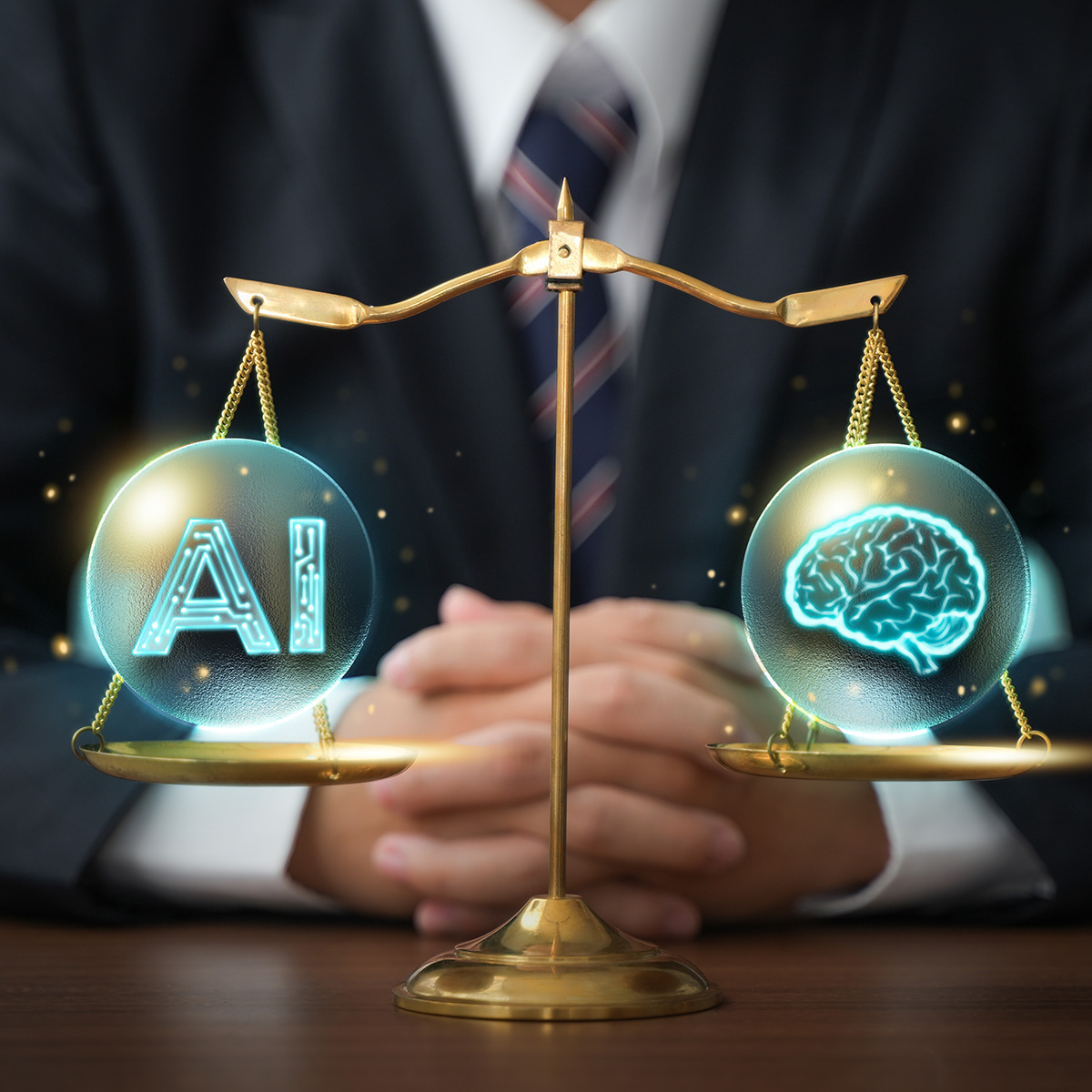
Professional services such as law, accounting, and other advisory services have, at their foundation, personal relationships and human expertise.
As with the rest of industry, generative AI is revolutionising how these services are delivered, driving efficiency and innovation, and improving client outcomes. For example:
• In healthcare, AI algorithms can identify risk factors in a bid to help prevent chronic conditions such as heart attacks and strokes.
• In legal services, AI can assist in reviewing documents, providing a summary of their contents and drafting agreements and legal submissions.
• In accounting, AI tools can be used to predict, forecast, and profile risks, as well as extract data for audit work.
Many clients are already reaping the benefits of large language models, and the opportunities they present for an enhanced client experience seem endless. Although as professionals increasingly utilise AI tools with such improvements, so come risks that cause financial loss or harm to a client:
• the opaqueness of how algorithms make decisions (the so-called “black box”) can lead to misinformation and unfair biases.
• AI can make errors and sometimes ‘hallucinate’ to fill a gap in the information they act on.
This presents the challenge of ensuring clients are still protected when things go wrong.
What is professional negligence?
In short, professional negligence is where a professional fails to perform his or her responsibilities to the required standard to be expected of a reasonably competent practitioner in their field. This poor conduct results in foreseeable financial loss or harm for the client. Traditionally, such cases have been considered in the context of human error.
Now, with AI systems becoming more sophisticated and widely used by professionals (perhaps without a proper understanding of how they work), the line between who or what is responsible for a mistake can be difficult to identify. Generative AI works differently from any technology professionals may have employed in the past; the issue of how liability will attach if things go wrong is a concern, and new types of claims will likely arise.
Where does responsibility lie for mistakes made by an AI tool?
When considering what has gone wrong in any situation, the lack of transparency of the AI tool makes it difficult to know why a particular decision or recommendation was made. Further, because we are not yet at the stage where AI tools act autonomously, there will have to be some human judgment put into the outcome, further blurring the lines.
For example, a client may incur loss because:
• an architect uses AI modelling to design a building which is over-designed, leading to an increase in costs, or worse, a building which is structurally unsafe.
• A lawyer uses AI to generate legal advice, but the advice is wrong
• A financial advisor uses AI to generate investment recommendations that are unsuitable for the client.
Who will be the relevant party depends on the reason the errors arise:
• Was it the data on which the AI tool is trained that caused the errors? Had it been input incorrectly, or perhaps there wasn’t a sufficiently large enough data set?
• Was there a problem with the AI tool itself? Perhaps the algorithm was faulty in some way, and there was a flaw in its processing. Or perhaps the system was not properly updated or maintained.
• Or was it the professional who improperly used the AI tool by failing to recognise its limitations or perhaps used inappropriate prompts? Or perhaps failed to properly assess its recommendations, detect any errors and correct them? Or even failed to keep up to date with the industry norms and professional body regulations regarding the required standards of using AI?
All of these can leave the client unclear as to what has gone wrong and why, and facing a struggle to show whether it was human error or the AI output that was determinative of the decision or recommendation that led to the loss. Further, the client will need to show the losses incurred were reasonably foreseeable in the context of any known limitations of the AI tool.
Conclusion
It is inevitable that all professional service firms will be using AI tools to some extent in the near future. So, how can clients take advantage of the obvious benefits yet mitigate the risks? I would suggest:
1. Inquire about what role AI tools are being used to make decisions in your assignments.
2. Ask who will be responsible if there is an error, and can the professional deflect responsibility onto the AI provider? And what is the exclusion of liability?
3. Know what the capabilities and limitations are of the AI tool in question.
4. Keep up to date with AI regulations.