


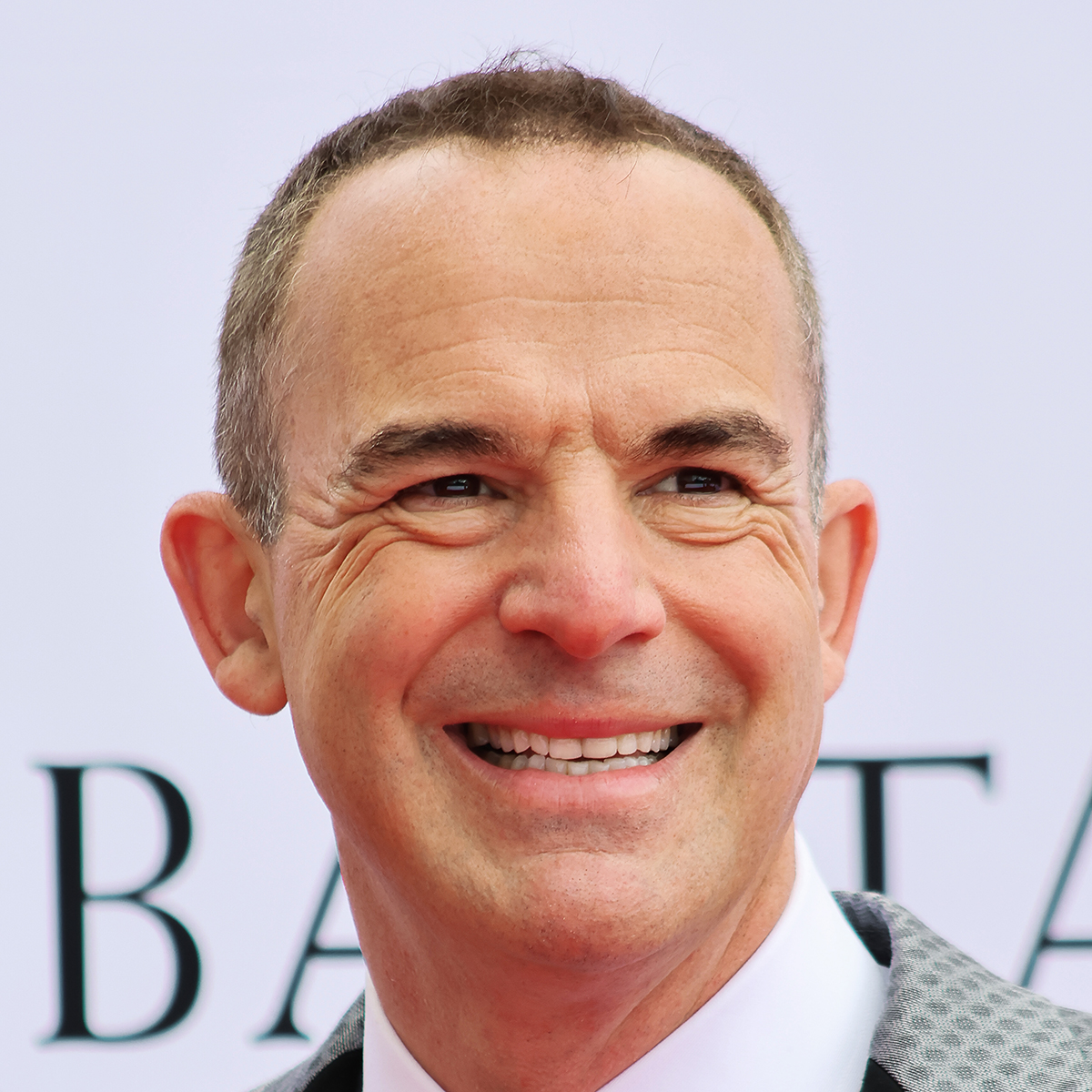
Lewis, 54, has been a presenter for ITV on the morning programmes Good Morning Britain and This Morning since 2007. Additionally, he presents The Martin Lewis Money Show, also on ITV.
In his own words, he is a ‘consumer finance expert’, and not a qualified economist. That said, he is one of the governors at the London School of Economics.
His main public presence is that of a caring person who cares passionately about consumer rights. Passionate to the point of getting angry, and often doing very well not to lapse into some Anglo-Saxon vernacular that the TV broadcasters might get upset about.
Lewis created and ran the website MoneySavingExpert.com (MSE), which was originally launched in February 2003 for just £100. In September 2012, he sold the website to the Moneysupermarket.com group for up to £87m but remained editor-in-chief. The deal saw Lewis receive £35m cash up front in addition to 22.1m shares in Moneysupermarket.com and £27m in future payments. He simultaneously announced his intention to donate £10m to charity, with £1m going to Citizens Advice.
In July 2015 Lewis sold just over half his shareholding in Moneysupermarket.com, obtained in the sale of Money Saving Expert, for £25.2 million. On the back of this, he gave a further £1m to Citizens Advice and £500,000 each to The Trussell Trust and the Personal Finance Education Group to fund financial triage and education work.
In 2018, Lewis started legal action against Facebook for defamation over fake adverts using his face and name, mostly promoting “bitcoin” and “investing”. He later settled the action after Facebook agreed to fund an anti-scam project.
While he was satisfied with the settlement, those agreements never really took hold, and scam ads continue to this day, while the tech companies, whom he believes are part-culpable for the victims, have refused to help or compensate anyone who has fallen for the fake ads. As late as 2026, he was still explaining to consumers and critics that he doesn’t do endorsements or advertisements, and any that do feature his image or name are, somewhat conspiratorially, ‘deepfake’.
Campaigns
In late 2005, campaigns against what were claimed to be unfair bank charges gained momentum, and a few small websites began highlighting the issue. Lewis was at the forefront of the media campaign to reclaim what he felt were unfair and unlawful fees charged by UK banks. He presented the first mainstream television programme on how to reclaim bank fees (ITV1’s Tonight) and in November 2006 published a step-by-step guide, including template letters, as well as regularly appearing across the media to champion the issue.
Despite setbacks due to legal technicalities, he continued his campaign through to 2010, when, from then on, he offered information regarding claims on legal grounds made in court, which had been published in February of that year.
In 2016, Lewis launched and provided funding for the Money and Mental Health Policy Institute, a think tank directed by former Liberal Democrat adviser Polly Mackenzie to study the link between mental health issues and debt. Lewis’ other large-scale campaigns, with the ensuing television programmes, include campaigns for refunds for missold payment protection insurance. Between January 2011 and December 2019, UK banks paid £38.3 billion in compensation for millions of fraudulently sold policies.
Lewis has requested to be created a crossbench peer (a peer of no political affiliation) in the House of Lords but was rejected by the House of Lords Appointments Commission, which encouraged him to apply again in the future.
He believes he was turned down due to work and family obligations leaving him with limited time for parliamentary work, though a spokesperson for the appointments commission denied the claimed reasons, stating that some very good candidates were rejected.
As an activist on behalf of consumers’ rights, this would have made a good move as it would have allowed him to continue his work, irrespective of whichever administration was in government, while having direct access to the corridors of power, and to a certain extent, direct influence over any debates and procedures.
Lewis is a champion of those most affected by the ongoing cost-of-living crisis. Much of his ire stems from what he believes are either sharp or unfair practices by utility companies, or deliberate government policy, for instance, on how fuel prices are calculated, which puts the most vulnerable (whether the poorest, the third generation or those with physical or mental health issues) at higher risk than others.
He is forthright and open in his take on consumer finance. When new Prime Minister Andy Burnham’s administration announced the removal of VAT on electricity from October 1st, Lewis set about crunching the numbers, and while any reduction, he opined, was welcome, it was going to be swallowed up by the new higher price cap. So, hardly anyone will benefit from the VAT reduction.
Lewis’ main strengths are that he can look beyond the headlines, using facts and figures and often translating some horrendous corporate word soup into plain English for listeners and viewers. For this, his integrity is valued by consumers on TV and social media, where he currently has 3.2m followers on X.
Why does this matter?
Despite certain political considerations that the investment in renewable energy is hiking our energy prices, it’s wholesale international costs that can be, and have been, prone to spikes (the war in Ukraine being one example) and is the single biggest driver of UK domestic energy prices.
During a ‘cost-of-living’ crisis, vulnerable and now, the not-so-vulnerable (‘low- and middle-income households’) are being hit by a lack of transparency in public services billing. There is a growing political will for the UK to ‘break the link’ in energy prices; the ‘link’ being how UK gas and electricity prices are calculated, based on foreign agreements and markets.
Different countries are advancing with renewable energy at different paces and, compared with the rest of Europe, the UK is well placed to move much more quickly in this direction. And not just in terms of supply – in terms of the cost of supply as well.
While this is not Lewis’ main bone of contention, it is linked. The energy market is so convoluted, to the exclusion of anyone who wants to invest in that side of things, but more importantly, to the final billing price to the consumer.
Lewis’ oft-repeated howl is the lack of transparency in the utility companies’ billings and tariffs, though even that isn’t the only complaint he is written to about. The cost-of-living crisis isn’t just about whether people can afford to pay their bills; it’s also the ongoing effect - offering up a double whammy of misery - of cumulative debt, and the risk of losing everything due to unpaid bills via the bailiffs. Lewis isn’t sure whether the lack of transparency is deliberate or incompetence. As he diplomatically put it to the Commons Select Committee, “It’s not a conspiracy, it’s just crap.”
Put it this way: for anyone reading this, do you know your energy, broadband and water bills? Do you know if you can switch, and if so, to what? And is it easy? Many of you do know - you have to. Millions don’t.
As a side story, and as reported in Platinum recently, the government has put in place new measures to alter Council Tax arrears and debt collection processes, which currently fall outside the usual legal sphere of operation, to bring them more in line with other debt collection procedures. Some of these measures include requiring multiple notices, court orders and regulated bailiffs, where none were previously required.
As with any new administration, one always hopes for a new dawn. Is Andy Burnham’s new government - and he wielded a fairly hefty broom when choosing his cabinet - going to be in a position to help with the frustration Martin Lewis, via his myriad letters and emails he gets from worried consumers, often expresses? He was a champion of this in Manchester, but that was the parochial Mancunians who were recipients of his largesse. He didn’t have to deal with vastly different considerations – the City, for one.
Lewis himself makes no claims or statements about affiliation to any political party. He has worked with various administrations; his entire raison d’être, he states, is to campaign on behalf of the consumer. If he did make a statement on behalf of any party, those who don’t agree with that would then start to mistrust him.
In a field where trust is earned, and is easily lost, Lewis must walk a very hazardous tightrope; it’s therefore imperative his campaigning carries no party political message. This, through carfeul consideration of what he is trying to achieve, is something he has been able to pull off for over 20 years.
His work can only ever carry weight and value all the while people in authority are listening, and are minded to change. And that is something he will not stop at until they do.