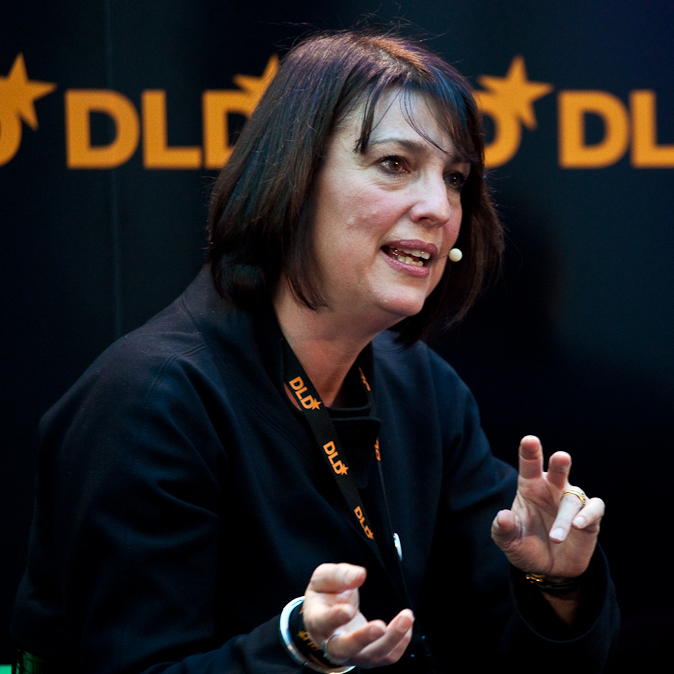



Bishop Sarah becomes the 106th Archbishop of Canterbury, a title dating back to 597 AD, when Saint Augustine arrived in Kent from Rome. Bishop Sarah will be the first woman to hold the office.
Born Sarah Bowser in Woking in 1962, Bishop Sarah became a Christian at the age of 16. Before being ordained, Bishop Sarah worked as a nurse in the National Health Service, which she has described as “an opportunity to reflect the love of God”.
She received clinical training in nursing from St Thomas’ Hospital and worked both there and at the Royal Marsden Hospital in Brompton, South West London, where she also began her study for ministry in the Church of England. She was ordained a priest in 2002 and began her ministry in the diocese of Southwark. She served in various London churches and, in 2012, became a canon of Salisbury Cathedral.
Three years later, Bishop Sarah took the role of Suffragan Bishop of Crediton in the Diocese of Exeter. In May 2018, Bishop Sarah was installed as the 133rd Bishop of London at St Paul’s Cathedral, the first woman to hold the role. Bishop Sarah is married to Eamonn, and they have two grown-up children, Liam and Grace. Before that, she was the Bishop of Crediton in the Diocese of Exeter.
Prior to her ordination in 2001, she was the Government’s Chief Nursing Officer for England – the youngest person ever to be appointed to that role at the age of 37 – having previously specialised in cancer care. Bishop Sarah has described nursing as “an opportunity to reflect the love of God”.
Bishop Sarah was made a Dame Commander of the Order of the British Empire in recognition of her outstanding contribution to nursing. She was ordained in 2001 and served her curacy in the Diocese of Southwark, initially as a self-supporting minister, before leaving her government post in 2004.
The Crown Nominations Commission (CNC) for Canterbury nominated Bishop Sarah following a process of public consultation and prayerful discernment that began in February 2025. The Canterbury CNC was made up of representatives from across the Church of England, the global Anglican Communion and the Diocese of Canterbury.
The most senior bishop in the Church of England, the Archbishop of Canterbury’s ministry combines many roles including serving as the Diocesan Bishop of the Diocese of Canterbury, Primate of All England and Metropolitan, as well as primus inter pares – or first among equals – of the Primates of the global Anglican Communion, which consists of around 85 million people, across 165 countries.
She was sworn of the Privy Council of the United Kingdom in March 2018, and was introduced to the House of Lords to sit on the Lords Spiritual benches two months later. She sits by virtue of her office (the Bishop of London is one of five Church of England bishops who automatically receive a Lords seat, independent of seniority).
She succeeded Richard Chartres and became the first female dean of the Chapel Royal in July 2019. Bishop Sarah played a leading role in King Charles’ 2023 coronation, one of three female prelates involved in the ceremonies.
On October 3rd 2025, the Church of England announced that Bishop Sarah would become the next archbishop of Canterbury, in succession to Justin Welby. As such, she will be Primate of All England and the metropolitan bishop of the Province of Canterbury. She will be the first woman to hold the post, and only the second since the Middle Ages not to have a degree from Oxford or Cambridge universities.
She was elected by the college of canons in December 2025, with legal confirmation following at St Paul’s Cathedral on January 28th. At this point, she legally becomes Archbishop of Canterbury and ceases to be Bishop of London. She will then be formally installed at Canterbury Cathedral in March, marking the beginning of her public ministry in the role.
Using language and vernacular clearly out of date for such a (belated) breakthrough, some conservative Anglican groups expressed their opposition to her appointment, based around her gender. Within the Church of England, the conservative evangelical Church Society stated that her election “creates additional problems of disunity in the Church in England and around the world” and voiced concern relating to her views on same-sex relationships.
Meanwhile, the traditionalist Anglo-Catholic Forward in Faith organisation, which rejects the ordination of women as priests and bishops, recognised her as the “true and lawful holder of that office”. Some Anglican churches, particularly in Africa, opposed her due to their opposition to the ordination of women and to Mullally’s views on the blessing of same-sex couples. The Global Fellowship of Confessing Anglicans, a conservative Anglican group primarily based in Africa and Asia, expressed its “sorrow” at Mullally’s appointment, saying that it proved that the Church of England “has relinquished its authority to lead”.
The Church of Uganda’s Stephen Kaziimba stated his “sadness” on Mullally’s appointment due to “her support and advocacy for unbiblical positions on sexuality and same-sex marriage that reveal her departure from the historic Anglican positions that uphold the authority of Scripture for faith and life”.
With that in mind, can anyone fail to understand the Church’s waning popularity and relevance now, given some of those regressive comments?
However, other Anglican groups in Africa have supported her; Emily Onyango, the first female Anglican bishop in Kenya, said that Mullally’s election indicated that “things will be done differently ... We know there will be justice in the church”. Thabo Makgoba, the archbishop of Cape Town, said that Mullally’s election was a “thrilling development”.
Social views
Bishop Sarah, on the other hand, is having none of that. She is a self-described feminist and has ordained both men and women. According to the Financial Times, Mullally “is seen as a theological liberal” (another unhelpful label, seemingly damning her with faint praise).
However, she also supports the inclusion in the Church of England of those who reject the ordination of women, stating upon her announcement as the next Bishop of London: “I am very respectful of those who, for theological reasons, cannot accept my role as a priest or a bishop. My belief is that Church diversity throughout London should flourish and grow; everybody should be able to find a spiritual home.”
In September 2016, she became one of ten bishops to make up the church’s “Bishops’ reflection group on sexuality”. In relation to same-sex relationships, she stated in 2017: “It is a time for us to reflect on our tradition and scripture, and together say how we can offer a response that is about it being inclusive love.” When asked about LGBT people in the church, she went further, and said: “What we have to remember is this is about people, and the church seeks to demonstrate love to all, because it reflects the God of love, who loves everybody.”
In 2018, Bishop Sarah stated that she supported the Church of England’s traditional teaching on marriage being between one man and one woman. In 2022, Mullally supported the observance of LGBT+ History Month and the launch of an advisory group to advise the diocese on “pastoral care and inclusion of LGBT+ people in the life of our church communities”.
Previously, Mullally has described her views on abortion as favouring abortion rights, although she would lean against abortion faced with her own decision. She has said: “I would suspect that I would describe my approach to this issue as ‘pro-choice’ rather than ‘pro-life’, although if it were a continuum, I would be somewhere along it moving towards pro-life when it relates to my choice and then enabling choice when it relates to others.”
In June 2025, she opposed new legislation that would extend abortion rights by decriminalising terminations in utero up to full term. Bishop Sarah signed an open letter from Anglican clergy that called the bill a “dangerous change” to the law.
New role
Upon her ordination as Archbishop of Canterbury, Bishop Sarah said: “As I respond to the call of Christ to this new ministry, I do so in the same spirit of service to God and to others that has motivated me since I first came to faith as a teenager.
“At every stage of that journey, through my nursing career and Christian ministry, I have learned to listen deeply – to people and to God’s gentle prompting – to seek to bring people together to find hope and healing.
“I want, very simply, to encourage the Church to continue to grow in confidence in the Gospel, to speak of the love that we find in Jesus Christ and for it to shape our actions. “And I look forward to sharing this journey of faith with the millions of people serving God and their communities in parishes all over the country and across the global Anglican Communion. I know this is a huge responsibility, but I approach it with a sense of peace and trust in God to carry me as He always has.”
Currently known as the Archbishop of Canterbury-designate, Bishop Sarah will legally become the Archbishop of Canterbury at her Confirmation of Election at St Paul’s Cathedral this month, with a service of installation taking place at Canterbury Cathedral in March.
As communities move on, the Church of England continues its struggles to regain the power and authority it once had over Anglican society. Bishop Sarah not only has to appeal to an absent flock, but also to fight an ongoing internal battle within her own Church to placate those who don’t want her in the top job in the first place.
But, as Margaret Thatcher once said, “If you want something said, ask a man; if you want something done, ask a woman.” It’s entirely possible that the Church of England has finally woken up to that mantra.
+ ARCHBISHOP OF CANTERBURY
The Roman province of Britannia had four archbishops, seated at Londinium (London), Eboracum (York), Lindum Colonia (Lincoln) and Corinium Dobunnorum (Cirencester). However, in the fifth and sixth centuries, Britannia began to be populated by Anglo-Saxons, who were pagan. Of the seven kingdoms they created, Kent arguably had the closest links with European politics, trade and culture, because it was conveniently situated for communication with continental Europe.
In the late sixth century, several years before the arrival of the first Christian mission to England, King Æthelberht of Kent married a Christian Frankish princess named Bertha. At this point, he permitted the preaching of Christianity.
The first archbishop of Canterbury was Saint Augustine of Canterbury. He led a delegation of 40 monks, who arrived in Kent in 597 AD, having been sent by Pope Gregory I on a mission to the English. He was accepted by King Æthelbert, on his conversion to Christianity, about the year 598.
Pope Gregory, oblivious of recent developments in the former Roman province, including the spread of the Pelagian heresy, had intended the new archepiscopal sees for England to be established in London and York. In the event, Canterbury was chosen over London owing to political circumstances. Since then, the archbishops of Canterbury have been referred to as occupying the Chair of St. Augustine.
Bishop Sarah Mullally becomes the 106th Archbishop of Canterbury, a role that had been vacant since January 2025, following the resignation of the previous Archbishop, Justin Welby.
In November 2024, Welby faced calls to resign, following the publication of the Makin Review into the Church’s handling of allegations of physical and sexual abuse committed by the barrister John Smyth at Christian camps in the 1970s and 1980s.
The report criticised Welby for failing to follow up on his subordinates’ claims that they had passed on the matter to the police after he was informed of the allegations in 2013, and stated that it was “unlikely” Welby was not aware of concerns being reported about Smyth during the time of the alleged offences, as he had claimed.
Despite initially stating that he would not resign, on November 12th 2024, following mounting pressure from both victims and clerics, Welby announced that he had spoken to King Charles III, the Supreme Governor of the Church of England and would resign.