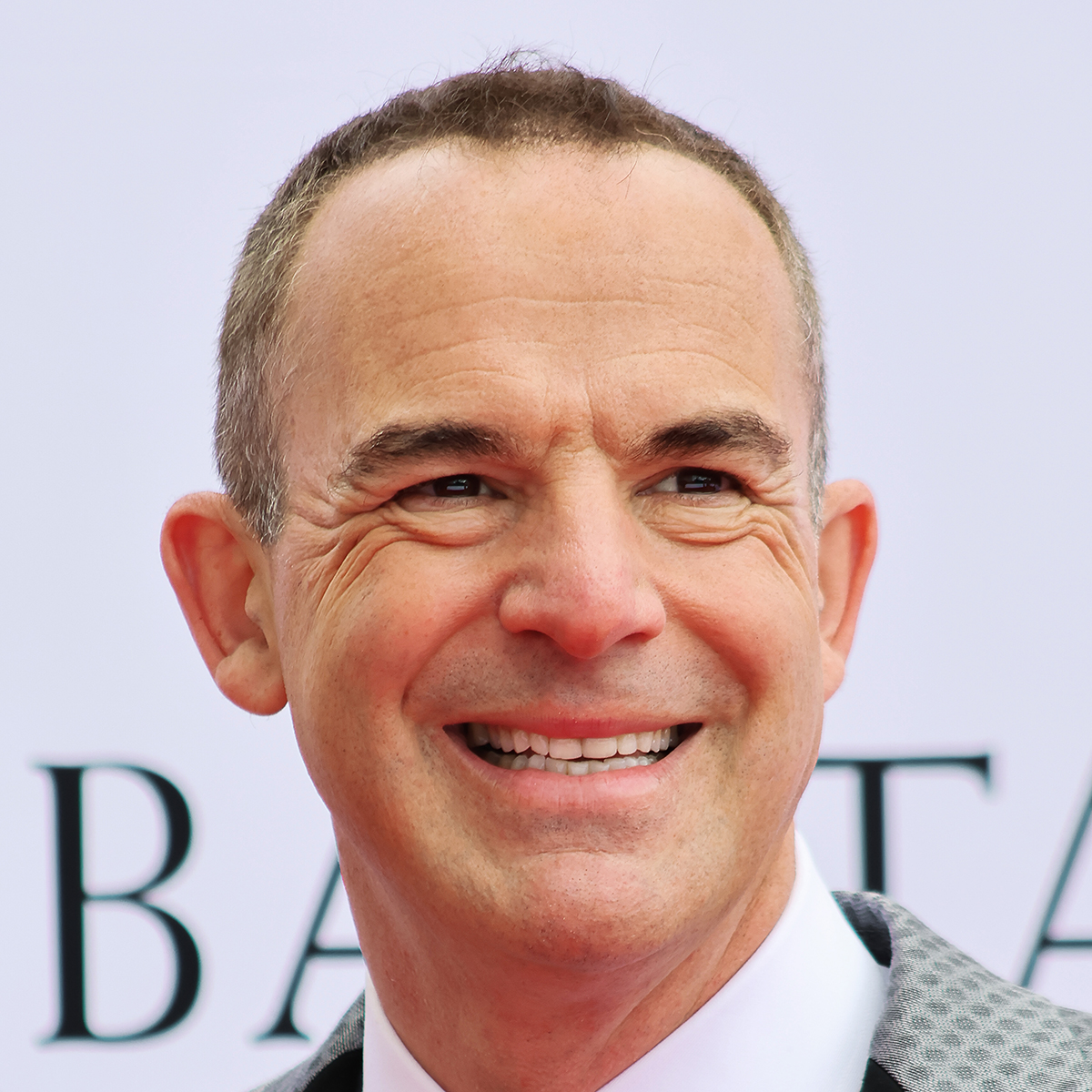



Former England rugby player Lewis Moody has announced he has Motor Neurone Disease (MND). High-profile players like Moody, Doddie Weir, and Rob Burrow have been diagnosed - the latter two having since passed away – leading to research into contact sports, head impacts, and exercise as risk factors.
So what are the sports’ governing bodies, especially those of the two national sports of rugby and football, doing about protecting their former and future players against the various forms of dementia? By Alan Wares
While a number of studies have suggested that professional rugby players are more likely to develop MND, at present, there is no causal link. Rugby – and in particular Kevin Sinfield, the friend and former Leeds Rhinos teammate of Burrow – has been instrumental in fundraising to support research into finding a cure.
The one thing everyone involved wants is clear answers, and unfortunately, they are very hard to come by. The current science can only tell you so much. The Motor Neurone Disease Association’s position is that the latest research suggests a correlation between traumatic brain injuries and MND, but that the same research has not proven that traumatic brain injuries are a cause of MND. Such injuries are just one of many genetic and environmental factors.
A 2022 study of more than 400 former international rugby players found that their risk of MND was 15 times greater than that of members of the general public who also participated. However, to muddy the waters, similar studies have also shown that the risks are just as high, or higher again, among cohorts of farmers and armed forces veterans.
The difference is that the latter’s stories aren’t considered particularly newsworthy. If there’s a public perception that rugby players are especially prone to the disease, it is partly because the players who have been diagnosed have done so much to raise awareness about it.
The science is not straightforward. As the MND Association has stated, the evidence “has often been conflicting and clear conclusions cannot be given”. It also points out that the numbers involved in some of the studies
themselves are so small that it is impossible to rule out random chance as a factor in the findings. No one wants to scaremonger people out of playing.
On the subject of traumatic brain injuries in sport, including football, boxing, rugby and other contact sports, the only thing that any two scientists in the field are likely to agree on is that we need to do more research; much more research, and they ask for longer, better-funded studies, and with more participants.
In the meantime, it’s up to the governing bodies to educate participants about the potential risks and provide the best guidance they can to mitigate them. In this regard, football and rugby union have acted pretty sluggishly.
Similarly, the diagnosis attributed to Lewis Moody, now 47, can’t necessarily be attributed to the brain trauma he suffered during his playing career. And, while he’s said he would go about things differently if he were playing today, he has never joined the group of players taking legal action against the game’s governing bodies for failing to better protect them from the long-term consequences of playing.
In his autobiography, Mad Dog, he describes the culture in professional rugby union during his playing time. He writes about being knocked unconscious for five minutes in an international match in 2007. “The team doc suggested I should come off. I told him where to go,” he wrote. “I’d waited this long to get my chance in the World Cup, and there was no way I was walking off after five minutes. A lineout followed and I had no idea what was going off.”
He was hit in the head again later in the same game. Moody didn’t just play on each of the following weekends, he even went out on a team jolly the next day, riding rollercoasters. “Every loop the loop was torture, every jerk of my car was like having a needle shoved through my head.”
He has said that he thinks the idea that anyone else was to blame for any damage he may have suffered from playing makes him uncomfortable. Although there are plenty who would disagree with that perspective, the attitude of bravado, almost to the point of abandoning self-preservation, still pervades across all levels of the game.
Cauliflower ears, received on-field, are seen as war trophies. Most forwards, especially the front of the scrum, don’t wear protective ‘scrum caps’. Impact is brutal and padding is minimal, and while that might draw admiration from NFL followers who watch their heroes padded to the hilt, it doesn’t help the rugby players at all.
In July this year, Alzheimer’s Society UK reported, “Two studies found that retired professional rugby players had changes in their brains and raised levels of proteins in their blood that could increase the risk of developing dementia in later life.
“Although it’s too early to say whether these players will go on to develop dementia, and the study continues for a few more years. Hopefully, this will provide further insight into whether these markers continue to change, and how this could impact the rugby players’ memory and thinking abilities.”
Scientists at Imperial College London studied 200 retired rugby players aged 30 to 61 years old. To estimate their history of traumatic brain injuries, players were asked about their career length, position and the number of concussions they recall experiencing. Information on the players was compared with 33 people with no experience of rugby or history of head injuries.
All the participants underwent brain scans and blood tests for a protein called p-tau217, which indicates the presence of dementia-related changes in the brain. They also had tests of their memory and thinking abilities to check for any signs of dementia.
Although none of the former rugby players developed early-onset dementia during the study, they did show changes known to be linked to dementia.
Many of the former players had less brain tissue in areas that play important roles in thinking and memory. They also had higher levels p-tau217 in their blood, indicating a higher future risk of Alzheimer’s disease – the most common cause of dementia.
Despite these biological changes, the retired players showed no difference in memory or thinking abilities compared with people with no rugby or head injury experience.
FOOTBALL
The most high-profile case, and one where a coroner first blamed the act of heading footballs, was one where he reached a verdict of ‘death by industrial disease’ in the case of Jeff Astle. Astle died in 2002, at the age of 59, after suffering for several years with dementia. He was a former West Brom-wich Albion and England striker who played during the 1960s and 1970s.
By the time of his death, there was already three decades’ worth of anecdotal evidence that heading the ball caused brain trauma. The Astle verdict meant there was now an official recognition of a link.
When you head the ball, the nerves are stretched, causing ongoing structural damage to the brain. The brain is attached to the spinal cord at the brainstem and sits inside a bag, which is then protected by a hard skull. Heading the ball can lead to a concussion at the time, or later headaches and a subsequent delayed concussion. Colloquially referred to as ‘seeing stars’.
Each heading of the ball, and football is the only sport where the head is used as an active implement, causes a tiny amount of damage, usually undetectable. The brain will recover from an occasional heading of the ball. However, constant, repeated heading doesn’t allow for that recovery, and, as such, any injuries that aren’t allowed to heal only exacerbate the problem.
As Dr Magdalena Ietswaart, Associate Professor in Cognitive Neuroscientist at the University of Stirling, said, “Heading the ball once doesn’t give you brain damage. We are talking about brain changes. Short-lived brain changes which are repeated over and over again.”
Even though Astle had died in 2002, and the FA and PFA promised support and research, this didn’t happen until 2018 when they finally commissioned researchers at the University of Nottingham to conduct tests on former footballers. In its report in 2023, it stated that 2.8% of retired footballers may be at a higher risk of medically diagnosed dementia and other neurodegenerative diseases, compared to 0.9% of the general population
In 2017, former England striker Alan Shearer made a documentary for the BBC about dementia, specifically Chronic Traumatic Encephalopathy (CTE) in retired footballers. He spoke to the family of Jeff Astle, who were still campaigning for answers at that time.
However, in talking to Shearer’s former manager, Chris Nicholl, the latter acknowledged that his brain was getting worse, telling Shearer, “I am brain-damaged from heading footballs. My memory is in trouble. Everyone forgets regular things, like where their keys are. But when you forget where you live, that’s different. I’ve had that for the last four or five years, and it is definitely getting worse. It bothers me.”
He went on to say that he hadn’t seen a doctor, feeling that they wouldn’t be able to do anything for him. It’s an attitude Shearer himself found typical that former sports players formed and lived by. Nicholl died in 2024, aged 77.
Football’s reluctance to acknowledge this issue changed when brain damage was diagnosed elsewhere, in American Football. Once the link between brain changes and CTE was made, the NFL moved quickly to set up a $750m compensation fund for players.
In 2017, US Soccer banned all children under the age of ten from heading the ball in practice or matches. The fear among neuroscientists was less about heading than about the act of challenging for a ball, which led to head clashes, which is far worse.
While research has not definitively concluded that under-10s heading the ball will lead to neurodegenerative issues in later life, one concern is that, compared with the rest of their bodies, children have larger heads and smaller necks than adults, which can lead to greater ‘brain-wobble’ and, hence, more problems later.
Research also found that girls are more likely to suffer a concussion than boys. Neuroscientists are, it must be said, baffled at the present time as to why this should be.
Fast forward seven years from Shearer’s documentary, and a study led by Glasgow University’s Professor Willie Stewart, the man who first found CTE in Jeff Astle’s brain 12 years after his death, found no evidence that the high dementia risk among footballers is linked to health and lifestyle factors.
It increases the likelihood that heading footballs has caused brain injuries. Professor Stewart discovered footballers were three-and-a-half times more likely to die from a neurodegenerative disease than the general population.
“Our data suggests this relationship between higher rates of neurodegenerative disease among former professional footballers is not driven by those wider general health and lifestyle factors, widely recognised as dementia risk factors,” said Professor Stewart.
“In the past, we would say that we felt the strongest risk was probably to do with head injuries and head impacts in sport, but we couldn’t be certain what their relationship was to alcohol, smoking, diabetes or blood pressure – these other risk factors might be involved. Now, we actually know, having looked at the data, that these other risk factors don’t appear to be contributing to the dementia risk.”
GOVERNING BODIES’ RESPONSIBILITIES
Rugby does at least acknowledge that brain trauma can occur during the game. As such, there is now a ‘concussion’ rule, allowing a player to go off - and be replaced – for immediate treatment and diagnosis. This was prevalent during the recent Women’s World Cup in England.
Football also recognises this issue, but for reasons best known to itself, FIFA, the world governing body, refuses to introduce a ‘concussion’ rule.
While research continues – research that was started by anecdotal evidence, and then brought to greater prominence by the high-profile deaths of Jeff Astle, Doddie Weir, Rob Burrow and possibly countless others – scientists are still looking for the direct causal link between high-impact sports and early-onset dementia.
The evidence points towards it, and while the figures betray any lingering notion of coincidence, the smoking gun has still proven elusive.