


Leadership and infrastructure: Big moves for growth
London Gatwick has appointed Mathieu Boutitie as its new Chief Technical Officer, effective January 2026. Mathieu brings extensive experience from Kansai Airport in Japan – part of the VINCI Airports network – and will play a pivotal role in delivering London Gatwick’s Capital Investment Plan and sustainability goals. His appointment reflects London Gatwick’s ambition to strengthen operational resilience and lead in efficiency and innovation as it shapes the airport’s future.
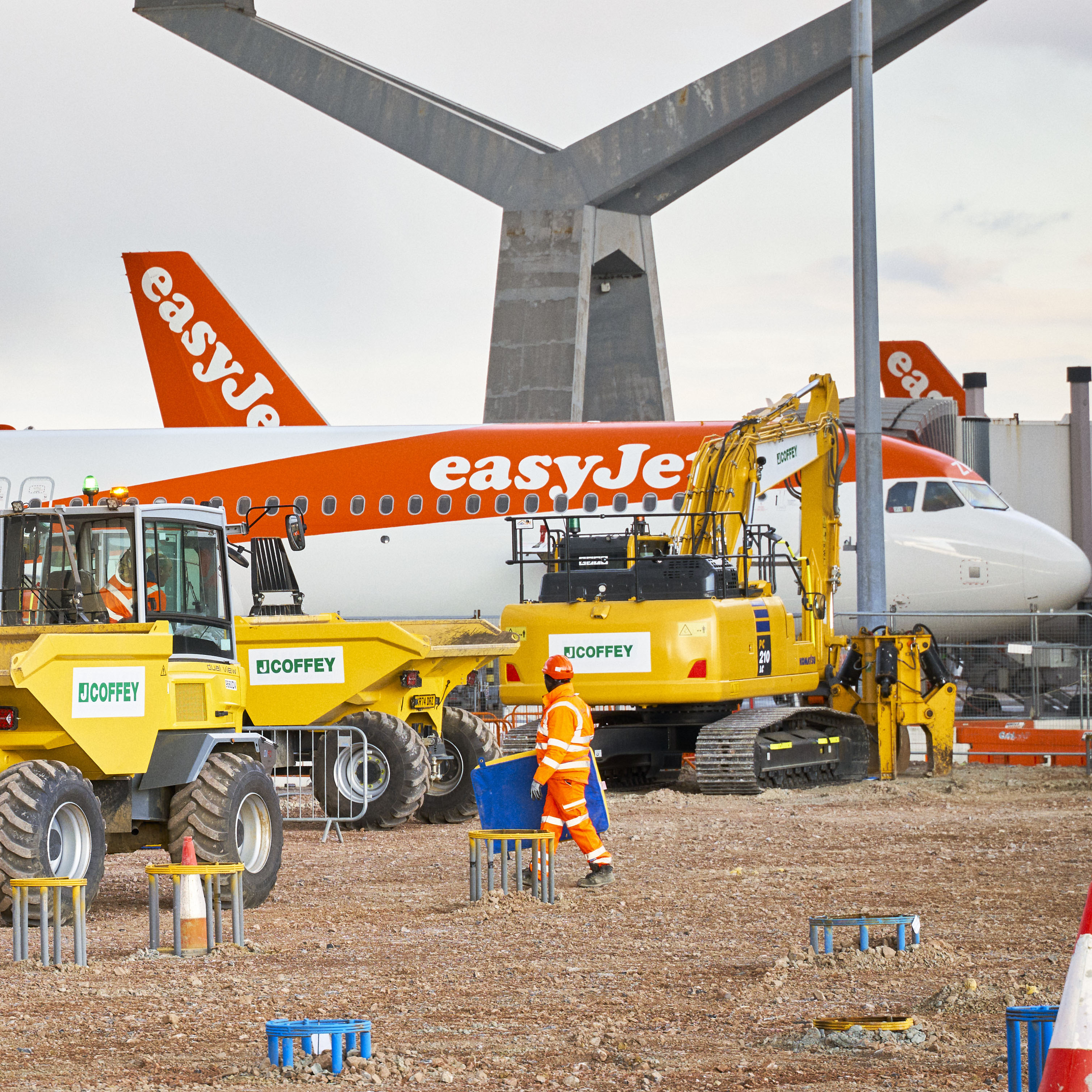
That future is already taking shape across the airfield. February marks a significant milestone with the completion of steelworks for the Pier 6 Western Extension, one of London Gatwick’s largest infrastructure projects. When complete in 2027, the extension will add eight new aircraft gates, eliminating the need for more than 500,000 passengers to travel by bus to remote stands each year – saving 12,000 bus journeys annually. This will provide a seamless experience for around 7.5m passengers every year and improve airfield efficiency for airlines.
Sustainability is central to the project, and the team has pursued several refinements as part of a significant redesign of the structure. These changes – including a hybrid steel-and-timber frame and more efficient ventilation systems – put the Pier 6 Extension on track to achieve BREEAM “Excellent” certification and deliver a 52% reduction in capital carbon compared to the original design. The completion of the steelworks this month marks a major step forward, reinforcing London Gatwick’s ability to deliver complex projects in the heart of its airfield.
Innovation & operational excellence
Innovation remains at the heart of London Gatwick’s operations. The airport is continuing its trial of Smart Stand technology, a first-of-its-kind system that enables aircraft turns to be managed from a central control room using automation and AI.
Designed to improve safety and reduce turnaround times, Smart Stand reflects London Gatwick’s role as one of VINCI Airports’ Innovation Centres of Excellence. Trials are ongoing, with Pier 6 earmarked for future integration as part of its wider upgrade – a move that will further enhance efficiency at the world’s most efficient single-runway airport.
Looking ahead, London Gatwick will introduce Dual Ground Operations in March – a major operational change that will ease air traffic control workloads by splitting radio frequencies for ground movements. This small shift will drive efficient operations, improving resilience and performance during peak periods.
Other projects on the horizon include the continued rollout of London Gatwick’s electric vehicle fleet replacement and the opening of a Contingency Control Room to strengthen operational resilience.
Building for tomorrow
Future building isn’t just about infrastructure; it’s about people. This month, London Gatwick will host its third Apprenticeships Fair at the on-site STEM (Science, Technology, Engineering and Maths) Centre, connecting local schools, colleges and jobseekers to opportunities in aviation and STEM.
Last year’s event welcomed 250 attendees, and this year aims to build on that success – reinforcing the airport’s role in supporting local employment and inspiring the next generation.
The event also supports the airport’s wider Decade of Change ambitions around the local community, including its work to champion a thriving local economy and develop regional skills.
This includes a target of 55% of the airport’s workforce from RH postcodes, with a stretch goal of 65%, alongside its aim of one million student interactions by 2030 – more than 676,000 of which have been achieved so far.
From major infrastructure projects to cutting-edge technology and sustainability initiatives, London Gatwick is building for tomorrow – creating an airport that is innovative, resilient and ready for the future.
Driving sustainability
Halfway through its second Decade of Change strategy, London Gatwick’s commitment to sustainability remains as strong as ever. The airport is focused on achieving Net Zero for Scope 1 and 2 emissions by 2030, embedding sustainability into every project.
Recent achievements highlight this culture of sustainability. Advanced Mixed Mode (AMM) time-based separation has transformed runway operations, reducing airborne holding times and potentially cutting annual CO2 emissions by up to 18,000 tonnes.
In construction, London Gatwick became the first airport globally to achieve PAS 2080 certification, a leading industry standard focused on cutting carbon across the whole lifecycle of infrastructure projects, setting a new benchmark for carbon reduction in infrastructure projects at the airport.
Beyond the airfield, London Gatwick has donated more than 11 tonnes of toiletries to local charities through its partnership with the Hygiene Bank, reinforcing its commitment to community impact alongside environmental progress.
Engineering teams have pioneered the use of Gearfluid at an airport, utilising the bio-based lubricant to extend gear life and reduce oil waste by up to 300%, while operational teams have introduced a new process for cabin waste segregation and recycling, diverting 17% of materials from landfill since August 2025. This process is approved by the UK’s Animal and Plant Health Agency, which regulates international catering waste.
London Gatwick’s efforts have not gone unnoticed. The airport was nominated for Best UK Airport at the Travel Weekly Globes, a testament to its commitment to operational excellence and the passenger experience.