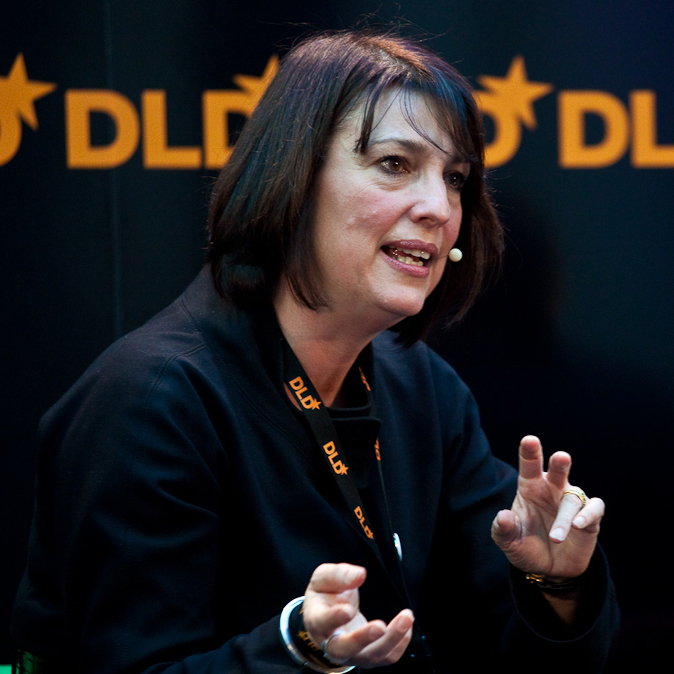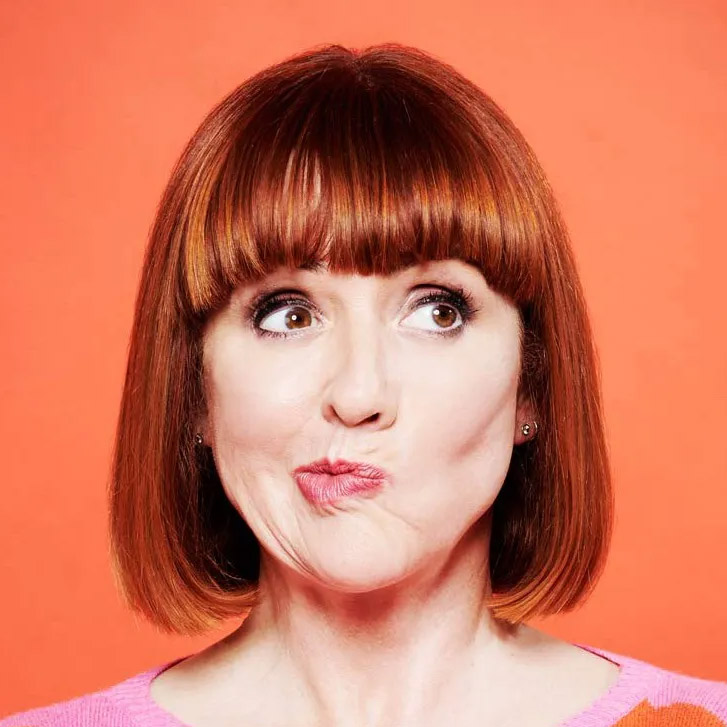



A few weeks ago, I was one of three female entrepreneurs selected to be part of a national campaign. An ex-Vogue photographer and her brilliant assistant came down to Brighton solely to capture me, and a team of writers flocked to hear my story. Armed in my yellow suit, it was an empowering experience that I excitedly relayed to friends shortly after.
The whole campaign was centred around championing women who build businesses and elevating unique, inspiring stories. Of the 1,000 businesses that were put forward, it’s an incredible achievement to be one of the three selected—one of my greatest achievements to date, in fact.
Yet, this was the last thing I thought when the social media proofs came through.
Instead, I was paralysed by fear, embarrassment and disgust. The photographs were awful — not the composition nor the quality, but the subject matter: me.
I looked like a squirrel with puffy cheeks, a double chin, chunky teeth and a half smile. I couldn’t possibly allow this to go onto the internet for the whole world to see. They’ll laugh, troll, and turn it into a meme. I could lose everything I’d ever worked for. I can’t believe that this is how I look.
The reaction overruled any sense of achievement I had. And it happens all the time.
Every photograph, video, and digital depiction of me brings out a visceral need to criticise. The more confident I become in my ambition, the less confident I am in the body that’s driving it forward. I’m able to empower over 150,000 women across the country yet frequently disempower myself.
In a perfect world, you would be reading this in shock that anyone can react like this. Yet, this is probably one of the most relatable things I’ve ever written.
A day later, with the confirmation that those were the best photographs for their vision, I signed off the proofs and watched them fly onto the internet. I then emailed the Dynamic Editor, Tess, to share my latest column angle: why I instantly jumped to insulting my appearance rather than celebrating one of the greatest achievements of my career to date.
To be a Dynamic Woman is not to have it all but to be it all. It’s to live in motion, even when the world is trying to freeze-frame you into a single image. And it’s to challenge societal expectations – not just the ones out there, but the ones we’ve absorbed ourselves. The day I saw my own face on that campaign, I realised how easy it was to become my harshest critic. But I also realised I had a choice: to look again. And this time, to see more.
The moment I came out of my self-critiquing trance, I recalled the multiple societal constraints that caused it to happen in the first place. As Naomi Wolf famously argued in 1990, when a woman starts to gain more power, societal beauty standards become stricter. These impossible beauty standards are there to keep women distracted, insecure and compliant.
Barbara Fredrickson and Tomi-Ann Roberts formed the Self-Objectification Theory in 1997 to explain how women and girls are socialised to internalise an outsider’s perspective on their own bodies. We’re trained to constantly monitor how we appear to others rather than how we feel, adopting an observer’s gaze towards our own bodies. It can lead to body shame, anxiety, decreased performance and disordered eating.
Then there’s the classic Laura Mulvey’s 1975 theory of The Male Gaze, explaining how mainstream media often creates images of women designed to appeal to a patriarchal lens—even when women are the creators. She argues that our eyes are subconsciously trained to see women in a certain light, connecting back to the Self-Objectification Theory as we internalise the male gaze onto our own selves.
There’s a high chance that you are familiar with these theories, amongst the numerous statistics that link a lack of self-confidence to societal conditioning. This includes statistics such as 88% of women compare their bodies to images that they see in the media, with 50% of those making negative comparisons (Journal of Eating Disorders, 2019). And, crushingly, 60% of women avoid important life activities because they don’t like how they look (Dove Global Beauty and Confidence Report, 2016).
It is an act of radical rebellion to refuse to be part of the 60%.
As the squirrel-like photo buried itself onto the screens of thousands of onlookers, I forced myself to see it through a different lens. This was helped considerably by the fact that it was met with praise and congratulation from my community—not the memes that I had dreaded, and not a single critique at the time of writing this.
Instead, I saw a woman in a yellow suit with funky glasses, perfectly messy brown hair and the ability to take on the world – and I, for one, love to be her.